
The Role of Technology in Modern Cockpits: What Pilots Need to Know
In today’s aviation industry, cockpit technology plays a vital role in improving flight safety, navigation accuracy, and pilot efficiency. Modern aircraft cockpits are equipped with advanced systems known as glass cockpits, flight management systems, autopilot technologies, and real-time navigation tools that have changed the way pilots fly.
For students pursuing a career in aviation, learning about cockpit technology is just as important as learning how to fly the aircraft itself. At Flytech Aviation Academy, we train future pilots to understand, manage, and master modern cockpit systems used in today’s commercial and private aircraft.
What Is a Modern Aircraft Cockpit?
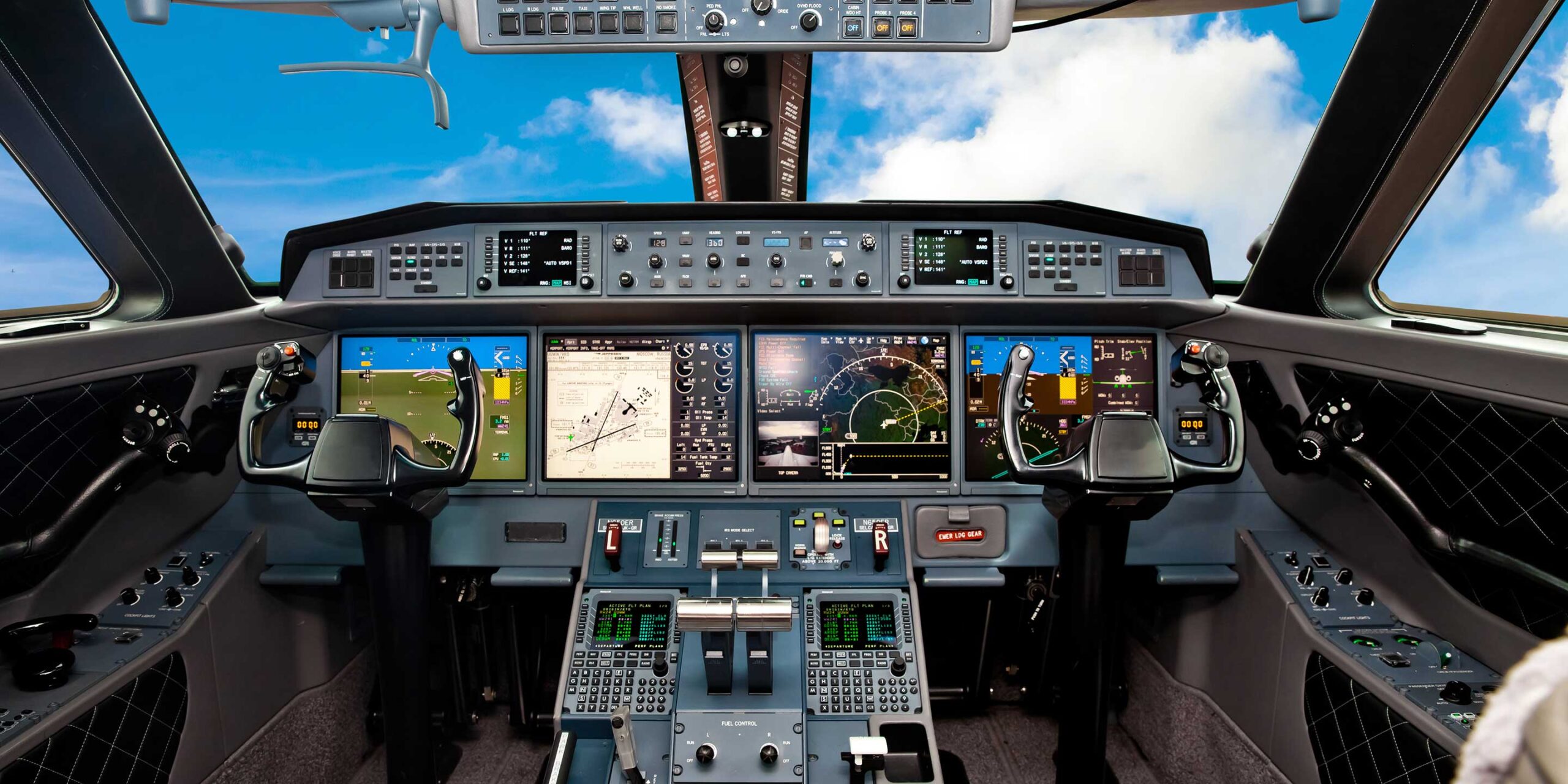
A modern cockpit refers to a digital flight deck where mechanical instruments are replaced by electronic displays. These screens show flight data such as speed, altitude, navigation paths, weather information, engine performance, and system alerts in one integrated interface.
This digital transformation enhances situational awareness for pilots, allowing them to make faster and more accurate decisions in both normal and emergency conditions. Modern cockpits are designed to reduce pilot workload while increasing precision and safety.
How Flight Technology Has Changed Pilot Training
In the past, pilot training focused heavily on manual flying and instrument interpretation. Today, pilots must understand aircraft systems, automation logic, and digital navigation techniques in addition to basic flying skills.
Technology-based training includes:
- Glass cockpit operations
- Flight management system programming
- Autopilot control modes
- Digital navigation techniques
- Simulator-based emergency scenarios
This means that aviation training institutes must keep pace with industry advancements. Flytech Aviation Academy ensures that students are trained on modern aviation systems that reflect real-world cockpit environments.
Understanding the Flight Management System (FMS)
The Flight Management System is the core technology responsible for managing navigation, speed, altitude profile, and fuel optimization. It calculates the best route based on flight data entered by the pilot.
A trained pilot must:
- Understand how the FMS plans routes
- Monitor system calculations
- Verify performance details
- Intervene when necessary
Without proper understanding of this system, automation can become risky. At Flytech Aviation Academy, students learn not only how to operate the FMS but how to analyze and validate its decisions.
Automation in the Cockpit: A Tool, Not a Replacement
Autopilot systems control many aspects of a modern flight, including altitude, speed, and navigation guidance. While automation improves accuracy and comfort, pilots are legally and technically responsible for every phase of flight.
Overdependence on technology can lead to:
- Reduced manual flying proficiency
- Lower alertness in unexpected conditions
- Delayed reaction during system malfunctions
Professional pilots are trained to use automation intelligently while maintaining strong manual flying skills. The ideal pilot is both technologically competent and physically capable of flying the aircraft in any situation.
Aviation Safety Technology in Modern Aircraft
Modern aircraft are equipped with advanced safety systems that assist pilots in critical situations:
- Traffic monitoring systems to prevent mid-air collisions
- Terrain awareness systems to avoid ground impact
- Weather tracking tools to detect turbulence and storms
- Alert systems to identify aircraft performance issues
These technologies greatly enhance safety but rely on pilot judgement for effective use.
Why Technology Does Not Replace Pilots
Even with advanced artificial intelligence and automation, human pilots remain essential. Machines cannot fully understand context, human behavior, or unpredictable situations.
When weather changes suddenly, when systems behave unexpectedly, or when communication becomes unclear, the pilot must interpret the situation and take immediate action.
Aviation authorities worldwide emphasize that pilot awareness, experience, and training remain the foundation of flight safety.
How Flytech Aviation Academy Trains Future-Ready Pilots
Flytech Aviation Academy integrates modern cockpit training into every phase of pilot education. Our approach includes:
- Advanced flight simulator training
- Systems management classes
- Automation failure training
- Real-time navigation practice
- Decision-making simulations
Our goal is to develop pilots who are confident in high technology environments and capable in manual flight conditions.
Conclusion:
Technology has transformed how aircraft are flown, but it has not changed the pilot’s responsibility. In fact, technology has made the role of the pilot more demanding, more technical, and more important.
Successful pilots are those who understand technology deeply and fly with confidence when systems fail.
At Flytech Aviation Academy, we prepare pilots for both worlds — advanced automation and raw flying skill.
Your journey in aviation begins with knowledge.
We turn knowledge into skill.
And skill into careers.