
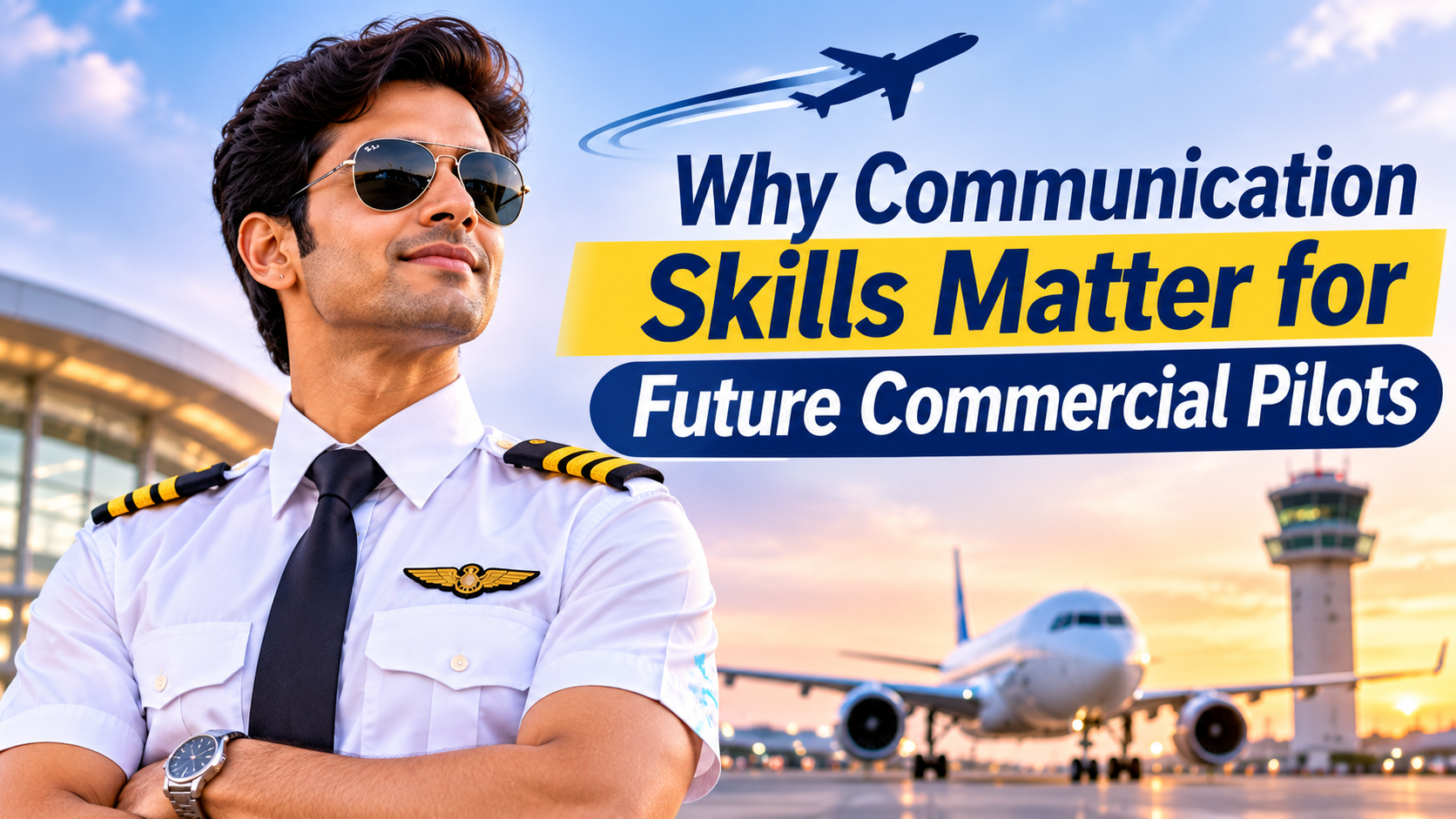
Why Communication Skills Matter for Future Commercial Pilots
Becoming a commercial pilot is about much more than learning to fly an aircraft. It requires technical knowledge, decision-making abilities, confidence, discipline, and effective communication. While flying skills are essential, communication plays an equally important role in ensuring safe and smooth flight operations.
For aspiring commercial pilots, developing strong communication skills from the beginning of their aviation journey can make a significant difference in their professional careers.
Let’s understand why communication skills are so important for future commercial pilots.
1. Clear Communication with Air Traffic Control (ATC)
One of the most important responsibilities of a commercial pilot is communicating with Air Traffic Control (ATC). Pilots regularly exchange information about flight clearances, weather conditions, runway instructions, altitude changes, and navigation.
Every instruction must be understood correctly and communicated clearly. Miscommunication can lead to confusion and potentially affect flight safety.
Future pilots must develop the ability to listen carefully, understand instructions quickly, and respond accurately using standard aviation phraseology.
2. English Proficiency Is Essential in Aviation
English is the international language of aviation. Pilots operating on international routes and communicating with different air traffic control units need a good command of aviation English.
The ability to speak and understand English helps pilots:
- Communicate with ATC across international airports.
- Understand aviation instructions and terminology.
- Coordinate effectively with international flight crews.
- Respond confidently during unexpected situations.
Aviation English is not simply about speaking fluently. It is about communicating information clearly, accurately, and without ambiguity.
3. Effective Communication Improves Cockpit Coordination
Commercial flights involve teamwork between the Pilot in Command (Captain) and the First Officer. Both pilots must work together throughout every stage of a flight.
Effective cockpit communication helps pilots share information, cross-check instructions, discuss decisions, and manage their responsibilities.
Crew Resource Management (CRM) emphasizes teamwork, situational awareness, leadership, and communication. These skills help flight crews work together efficiently and maintain safe flight operations.
4. Communication Is Critical During Emergency Situations
Pilots must be prepared to handle unexpected situations such as engine problems, severe weather, technical warnings, and medical emergencies.
During such situations, clear communication becomes extremely important. Pilots need to exchange information with their crew, coordinate with ATC, and follow established emergency procedures.
Staying calm, communicating essential information, and making timely decisions can help manage challenging situations effectively.
5. Communication Builds Confidence and Leadership
A commercial pilot is not just an aircraft operator but also a professional responsible for making important decisions.
Strong communication skills help pilots demonstrate leadership, express their decisions confidently, coordinate with cabin crew, and maintain professionalism.
These abilities are also valuable during pilot selection interviews, simulator assessments, and airline training programmes.
6. How Can Aspiring Pilots Improve Their Communication Skills?
Students planning to become commercial pilots can start improving their communication abilities even before beginning their flying training.
Here are some practical ways to develop these skills:
Practice Spoken English: Regular conversations, reading aloud, and listening to English aviation content can improve fluency and confidence.
Learn Aviation Terminology: Familiarise yourself with common aviation terms, radio communication procedures, and standard phraseology.
Develop Listening Skills: Practice understanding spoken instructions and responding accurately without confusion.
Participate in Group Discussions: Interacting with fellow students helps improve confidence, teamwork, and the ability to express ideas clearly.
Build Situational Awareness: Learn to communicate relevant information clearly while maintaining awareness of changing situations.
Practice Professional Communication: Develop the habit of speaking calmly, clearly, and respectfully in different situations.
7. Why Communication Training Should Begin During Pilot Training
Communication skills should not be developed only after joining an airline. They should become part of a student’s training from the beginning.
During ground classes, flight training, simulator sessions, and practical aviation activities, students get opportunities to develop their technical knowledge alongside their communication abilities.
Building these skills early helps aspiring pilots become more confident, responsible, and prepared for the professional aviation environment.
Conclusion
A successful commercial pilot needs more than flying experience. Clear communication, teamwork, leadership, and the ability to make decisions under pressure are equally important qualities.
For students dreaming of becoming airline pilots, developing communication skills alongside aviation knowledge is an important step towards building a successful career in the aviation industry.
Your journey to becoming a commercial pilot starts with the right training and the right skills.
Begin Your Aviation Journey with Flytech Aviation Academy
At Flytech Aviation Academy, Hyderabad, aspiring pilots can take their first steps towards an aviation career through professional pilot training and aviation education.
With experienced instructors, aviation training facilities, and a learning environment focused on developing future aviation professionals, students can work towards building the knowledge and skills required for their flying careers.
Dream of becoming a commercial pilot? Start preparing for your future in aviation today!
🌐 Website: https://flytechaviation.aero/
📞 Admissions: +91 93477 74442 / +91 93477 73336
📧 Email: admissions@flytechaviation.aero