
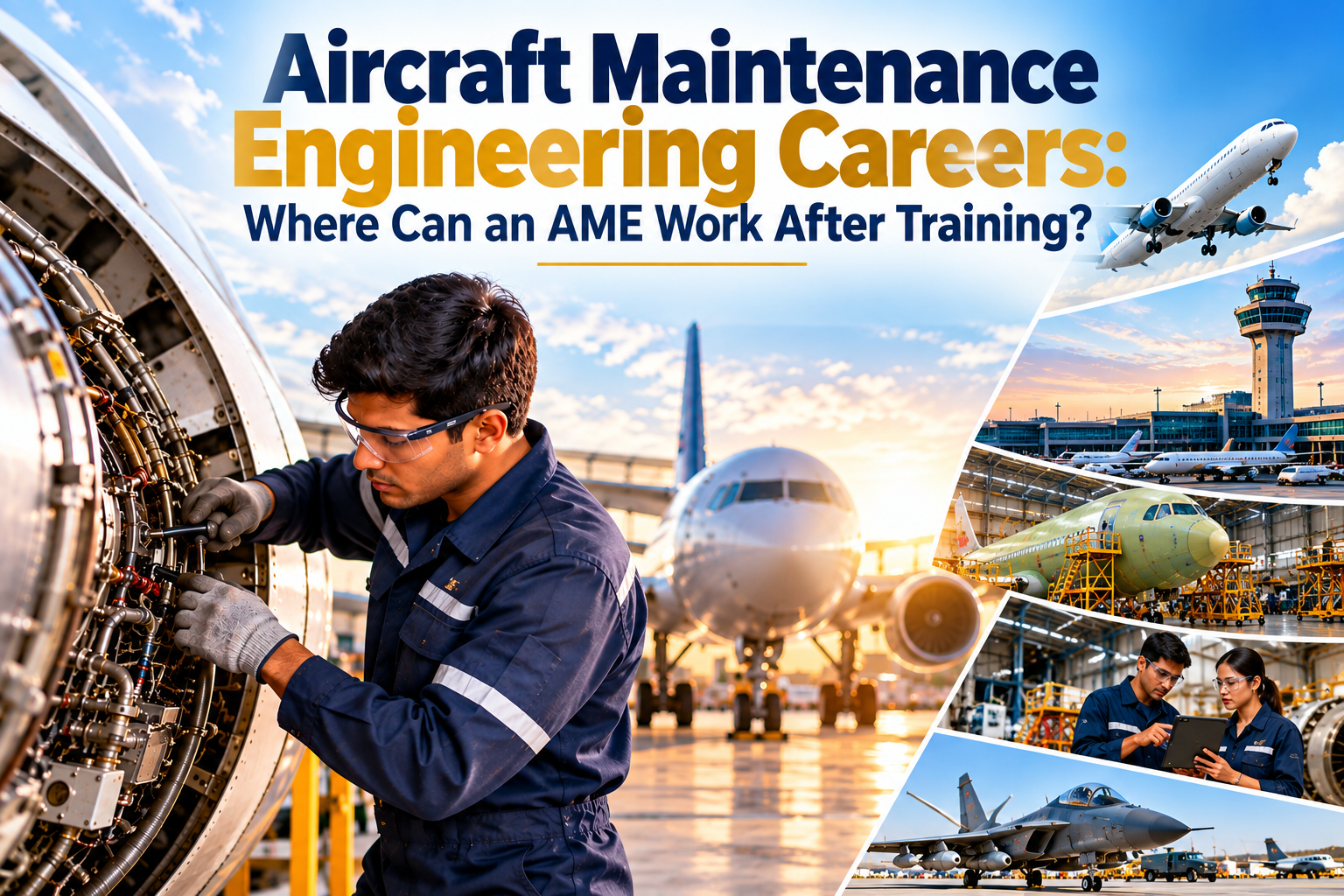
Aircraft Maintenance Engineering Careers: Where Can an AME Work After Training?
Every time an aircraft takes off, thousands of passengers trust that it is safe to fly. Behind that trust is a team of skilled professionals who inspect, maintain, and certify every aircraft: Aircraft Maintenance Engineers (AMEs).
If you have always wanted to work in aviation but don’t see yourself in the cockpit, Aircraft Maintenance Engineering (AME) can be a rewarding path. For students searching for an AME course in Hyderabad, this guide explains what AMEs do, where they work, and how to take the first step.
Table of Contents
- What Is Aircraft Maintenance Engineering?
- Why Choose AME as a Career?
- Industries Looking for AMEs
- Skills That Help You Succeed as an AME
- How to Start Your AME Journey
- Why Train at Flytech Aviation Academy?
- FAQs About AME Careers
- Conclusion
1. What Is Aircraft Maintenance Engineering?
Aircraft Maintenance Engineering is the technical discipline of keeping aircraft safe, reliable, and airworthy. AMEs work on airframes, engines, avionics, electrical systems, hydraulics, and other aircraft systems.
Their responsibilities generally include:
- Inspecting aircraft at scheduled intervals
- Diagnosing and troubleshooting faults
- Repairing and replacing components
- Following maintenance manuals and regulatory procedures
- Maintaining accurate technical records
- Certifying that an aircraft is fit to fly
Every flight depends on this work, and that is what makes it one of the most important roles in aviation.
2. Why Choose AME as a Career?
- Strong demand for skilled technicians: As airlines and aviation businesses grow, so does the need for qualified maintenance professionals.
- Hands-on, technical work: If you enjoy understanding how machines work, AME lets you apply that interest to real aircraft.
- Varied career paths: AME training can lead to roles across airlines, manufacturing, defence, research, and more.
- Respected responsibility: AMEs play a direct role in flight safety.
- Long-term growth: With experience and additional qualifications, professionals can move into supervisory, inspection, quality, and planning roles.
3. Industries Looking for AMEs
A qualified AME is not limited to one type of employer. Here are the major sectors where AME professionals build careers.
Major Government and Private Airlines
Airlines need engineers to maintain their fleets, carry out line and base maintenance, and keep aircraft ready for daily operations. This is the most common career destination for AME graduates.
Aviation Regulatory Authorities
Regulatory bodies oversee aviation safety standards, aircraft airworthiness, and compliance. AME professionals with the right experience can contribute to inspections, audits, and safety oversight.
Aircraft Manufacturing Companies
Manufacturers need skilled engineers for assembly, testing, quality control, and production support. This gives AMEs exposure to how aircraft are built as well as maintained.
Aerospace Research and Development
Aerospace R&D organisations work on new technologies, materials, systems, and aircraft improvements. Technical knowledge from AME training can support testing, prototyping, and development work.
Defence and Military Aviation
Defence aviation relies on technically skilled personnel to maintain aircraft and aviation systems, and this sector values discipline and precision.
Aviation Consulting Firms
Consulting firms advise airlines, operators, and organisations on maintenance planning, compliance, safety systems, and operational efficiency. Experienced AMEs can build rewarding careers as technical advisors.
Flying Schools
Flying schools need qualified engineers to keep their training aircraft safe and serviceable, since regular flight training depends on well-maintained aircraft.
4. Skills That Help You Succeed as an AME
Technical knowledge is the foundation, but these qualities matter too:
- Attention to detail
- Strong problem-solving ability
- Understanding of mechanical and electrical systems
- Discipline and a safety-first mindset
- Ability to follow technical procedures accurately
- Teamwork and clear communication
- Willingness to keep learning as technology evolves
5. How to Start Your AME Journey
- Understand the eligibility requirements for AME training, including the academic qualifications needed.
- Research approved training institutes and compare their facilities, practical exposure, and student support.
- Choose the right programme based on your interests and career goals.
- Complete your training with a focus on both theory and hands-on practice.
- Prepare for the licensing and examination requirements that apply to aircraft maintenance engineers.
- Start building your career through opportunities in airlines, MRO organisations, and other aviation sectors.
Speaking to an aviation training academy early can help you understand each step clearly before you commit.
6. Why Train at Flytech Aviation Academy?
Choosing the right institute shapes your career. At Flytech Aviation Academy, students interested in aviation can explore structured training programmes designed to build both technical knowledge and practical readiness for the industry.
Aspiring AMEs can expect to:
- Learn aircraft systems and maintenance fundamentals
- Build practical, hands-on understanding
- Receive guidance on career pathways in aviation
- Prepare for opportunities across multiple aviation sectors
If you are looking for an AME course in Hyderabad, Flytech Aviation Academy is a place to start your research.
7. FAQs About AME Careers
What does an Aircraft Maintenance Engineer do?
An AME inspects, maintains, repairs, and certifies aircraft so they remain safe and airworthy.
Is AME a good career choice?
For students who enjoy technical, hands-on work and want a role directly tied to aviation safety, AME is a strong option.
Where can I work after completing AME?
Career options include airlines, regulatory authorities, aircraft manufacturers, aerospace R&D organisations, defence aviation, aviation consulting firms, and flying schools.
Do I have to be a pilot to work in aviation?
No. Aviation offers many careers beyond flying, and aircraft maintenance engineering is one of the most important.
What skills do I need to become an AME?
Attention to detail, technical aptitude, problem-solving, discipline, and a commitment to safety.
How do I choose the right AME institute in Hyderabad?
Compare the training approach, practical exposure, facilities, faculty, and career guidance, and ask for complete details before enrolling.
Can I grow into senior roles as an AME?
Yes. With experience and further qualifications, AMEs can move into supervisory, inspection, quality assurance, planning, and technical advisory roles.
8. Conclusion
If you have ever dreamed of working in aviation, you don’t have to be in the cockpit to make it happen. Aircraft Maintenance Engineering offers a technical, respected, and future-focused career with opportunities across airlines, manufacturers, defence, research, consulting, and training organisations.
With the right guidance and training, your aviation dream can become a profession.
Ready to take the first step? Connect with Flytech Aviation Academy to explore AME training options and start building your career in aviation.