
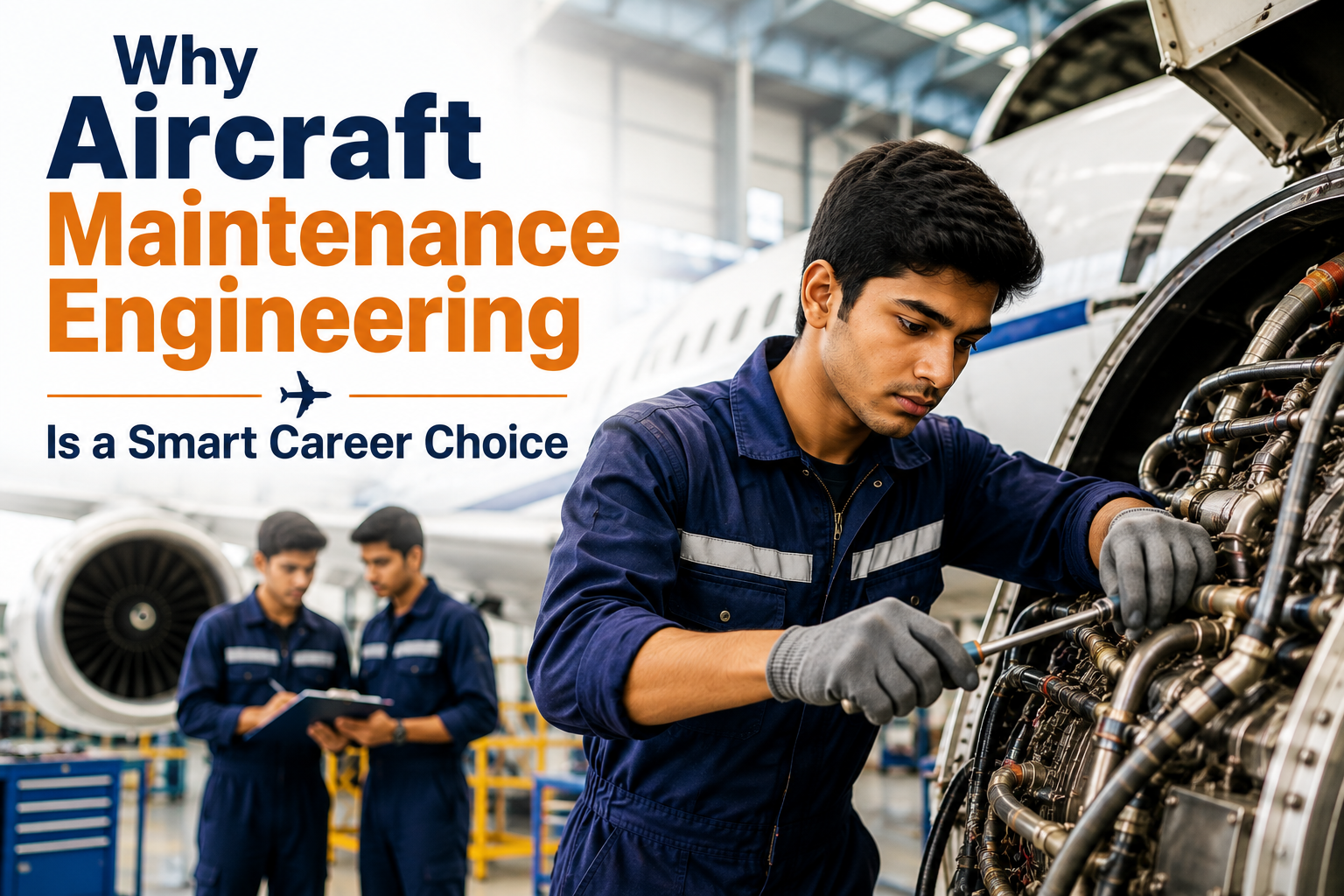
Why Aircraft Maintenance Engineering Is a Smart Career Choice
The aviation industry is one of the most exciting and technologically advanced sectors in the world. While pilots and cabin crew are often the most visible professionals in aviation, there is another group of highly skilled experts working behind the scenes to keep aircraft safe, reliable, and airworthy — Aircraft Maintenance Engineers (AMEs).
If you have an interest in aircraft, engineering, technology, and hands-on technical work, Aircraft Maintenance Engineering can be a smart career choice. An AME career combines technical knowledge, practical skills, responsibility, and opportunities to grow within the aviation industry.
But what makes AME an attractive career path? Let’s explore the key reasons.
What Is Aircraft Maintenance Engineering?
Aircraft Maintenance Engineering focuses on the inspection, maintenance, troubleshooting, servicing, and overall airworthiness of aircraft.
AME professionals play an important role in ensuring that aircraft systems and components meet the required safety and maintenance standards. Their work can involve areas such as aircraft structures, engines, electrical systems, hydraulics, avionics, and other critical aircraft components.
In simple terms, AMEs help make sure aircraft are safe and ready for operation.
1. Be Part of the Aviation Industry
For people passionate about aviation, AME provides an opportunity to build a career close to aircraft and aviation technology.
Instead of simply watching aircraft take off, you can develop the technical expertise needed to understand, inspect, maintain, and support them.
Working in aircraft maintenance can provide exposure to an industry where technology, precision, and safety come together every day.
2. Develop Highly Specialized Technical Skills
AME training helps students develop specialized knowledge that goes beyond basic engineering.
Depending on the training pathway, students may learn about:
- Aircraft structures
- Aircraft engines
- Aerodynamics
- Electrical systems
- Hydraulic and pneumatic systems
- Avionics
- Aircraft instruments
- Maintenance procedures
- Troubleshooting techniques
- Aviation safety
These skills can provide a strong technical foundation for a career in aircraft maintenance.
3. A Career Built Around Safety and Responsibility
Every aircraft needs to meet strict safety and maintenance requirements before it operates.
This makes aircraft maintenance a career that carries significant professional responsibility. AMEs need to follow approved procedures, pay close attention to detail, maintain accurate records, and identify potential technical issues.
For individuals who enjoy responsibility and take pride in precision, this can make AME a particularly rewarding profession.
4. Hands-On Learning and Practical Work
Not everyone enjoys a career that involves sitting behind a desk all day.
AME can be an excellent option for students who enjoy practical, hands-on technical work.
Training typically combines classroom-based knowledge with practical learning, allowing students to understand aircraft systems and apply their knowledge to maintenance-related activities.
This combination of theory and practical exposure can help students develop confidence in working with complex equipment.
5. Work With Advanced Aviation Technology
Aircraft are becoming increasingly sophisticated. Modern aviation incorporates advanced avionics, digital systems, automation, sensors, diagnostics, and other technologies.
As an AME, you can work in an environment where technology is constantly evolving.
This makes continuous learning an important part of the profession and provides opportunities for technically curious individuals to keep developing their knowledge.
6. Opportunities Across the Aviation Ecosystem
Aircraft maintenance is essential to aviation operations, creating opportunities across different areas of the industry.
Depending on qualifications, licensing, experience, and employer requirements, AME professionals may explore career opportunities with:
- Airlines
- Maintenance, Repair and Overhaul (MRO) organizations
- Aircraft operators
- Aviation maintenance companies
- Aircraft manufacturers
- Aviation service providers
- Other organizations involved in aircraft maintenance and support
Career opportunities vary by location, qualifications, licensing requirements, and industry demand.
7. Build Valuable Problem-Solving Skills
Aircraft maintenance is not simply about replacing parts.
Maintenance professionals often need to investigate technical problems, identify possible causes, interpret information, and determine appropriate corrective actions.
AME training can help develop valuable skills such as:
- Troubleshooting
- Logical thinking
- Root-cause analysis
- Technical decision-making
- Attention to detail
- Systematic problem-solving
These skills can contribute to professional growth throughout an aviation career.
8. Become Part of a Professional Team
Aircraft maintenance is a collaborative field.
AME professionals may work alongside other maintenance personnel, engineers, technicians, pilots, supervisors, and aviation organizations.
This creates an environment where communication, teamwork, coordination, and professional discipline are important.
Students who develop strong interpersonal skills alongside their technical abilities can be better prepared for the realities of aviation maintenance.
9. Continuous Career Development
The aviation industry continues to evolve, and maintenance professionals need to keep their knowledge and skills current.
New aircraft technologies, maintenance methods, regulations, tools, and diagnostic systems can create opportunities for professionals to continue learning.
For someone who wants a career that encourages lifelong learning and professional development, AME can be a strong option.
10. Contribute to Safe Air Travel
One of the most meaningful aspects of aircraft maintenance is knowing that your work contributes to aviation safety.
Every inspection, maintenance task, technical check, and correctly completed procedure can play a role in keeping aircraft operating safely.
An AME career can therefore provide not only technical satisfaction but also a strong sense of professional purpose.
Who Should Consider a Career in AME?
Aircraft Maintenance Engineering may be a good fit for students who:
- Have a strong interest in aircraft and aviation
- Enjoy engineering and technology
- Like practical and hands-on work
- Have good attention to detail
- Enjoy solving technical problems
- Are comfortable working with responsibility
- Value safety and discipline
- Are willing to continuously learn
- Enjoy working as part of a technical team
You don’t need to know everything about aircraft before starting your training. A structured AME program is designed to build knowledge progressively and develop the skills needed for aircraft maintenance.
Why Choose AME After 12th?
For students looking for an aviation-focused technical career after 12th, AME can offer a different path from more commonly known aviation careers.
Instead of focusing primarily on flying or passenger services, Aircraft maintenence engineering in hyderabad focuses on the technical side of aviation — understanding aircraft systems, maintenance procedures, safety, inspections, and airworthiness.
If you enjoy engineering and want your career to be connected directly to aircraft, AME may be worth exploring.
Why Choose Flytech Aviation Academy for AME Training?
Choosing the right training institution is an important step when planning an AME career.
Flytech Aviation Academy focuses on helping aspiring aviation professionals build the technical knowledge and practical understanding needed for aircraft maintenance.
A strong AME learning experience should help students develop not only technical knowledge but also professional qualities such as safety awareness, discipline, teamwork, problem-solving, and attention to detail.
Frequently Asked Questions About Aircraft Maintenance Engineering
1. Is Aircraft Maintenance Engineering a good career?
AME can be a rewarding career for individuals interested in aviation, engineering, technology, hands-on technical work, and aviation safety. Career opportunities depend on qualifications, licensing, experience, location, and industry requirements.
2. What does an Aircraft Maintenance Engineer do?
An AME works with aircraft maintenance activities such as inspections, servicing, troubleshooting, repairs, and maintenance documentation, according to applicable regulations and approved procedures.
3. Is AME suitable for students interested in aviation?
Yes. AME can be particularly suitable for students who are interested in aircraft but prefer a technical and engineering-focused career rather than becoming a pilot.
4. What subjects are important for AME?
Students generally benefit from a strong foundation in subjects such as physics and mathematics, along with an interest in engineering and technical systems. Specific eligibility requirements depend on the applicable AME program and regulations.
5. Does AME involve practical training?
Yes. AME education involves both theoretical learning and practical exposure. Practical training helps students understand how aircraft systems, tools, components, and maintenance procedures work in real-world environments.
6. Can AMEs work with airlines?
Qualified AME professionals may pursue opportunities with airlines and other aviation organizations, subject to the relevant licensing, qualification, experience, and employer requirements.
7. Is AME a challenging career?
AME can be challenging because it requires technical knowledge, precision, responsibility, continuous learning, and strict attention to safety. For people who enjoy solving technical problems and working with aircraft, these challenges can also make the career rewarding.
8. Does an AME career have growth opportunities?
Career progression can come through gaining relevant experience, maintaining required qualifications and licenses, developing specialized technical skills, and taking on greater responsibilities within aviation maintenance.
Conclusion
Aircraft Maintenance Engineering is more than a technical career — it is an opportunity to become an important part of the aviation industry.
With a combination of aircraft knowledge, practical skills, problem-solving ability, safety awareness, and professional responsibility, AME can provide an exciting career path for students who are passionate about aviation and technology.
If you dream of building a career behind the technology that keeps aircraft flying, AME could be the smart career choice you’ve been looking for.
Start exploring your aviation journey with Flytech Aviation Academy and take the first step toward a future in Aircraft Maintenance Engineering.